Exhibition: Square Re- Framed ( Study in the Variation of Rectangle- Joseph Albers #1 )
This is a series of prints looking at the the simplicity of square and rectangle and colour.
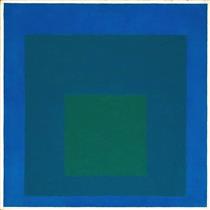
This is a series of prints extending the abstract artist Joseph Albers’s interest in the square, color, and abstraction. The work of Albers presents like a system, or mathematical formula, something rational and objective in one way, like a philosophical question or rational experience of line, shape, form. However, because of colour’s emotional lens, his works can also illicit emotive pleasure. However, because most of his works are small scale, under 2 feet by 2 feet, this emotive lens is limited or small. In contrast, larger colour field paintings, like a Rothko canvas of 10 feet by 8 feet, whose large paintings colour create a wave of emotion. Albers rather reveals both an intimate emotive experience mixed with the analytical , a non personal emotion, a mathematical structure. Because Albers creates squares within squares we are focused ” in” the space of the painting, whereas Rothko takes our emotive experience in and outside the edges of the painting, connecting his paintings to the world outside of the painting. Joseph Albers, on the other hand, seems to be painting objects which are more autonomous from the external everyday world, that are less connected to the world, culture, ideas, outside the painting, because our experience of the painting is more about the object, about lines, about the colours relating within the canvas, and experience inside the frame. I suggest, Alber’s painting, is more a philosophical question, than emotive or experiential, whereas Rothko is more “emotive”, “experiential”, ” visceral”, which sends our experience of the colours from his painting, out into the world, where such colours and emotions mix with our experiential lives. Albers’s colour, goes into our minds. Rothko, goes into our soul. My series, “re- framing the square”, is finding the space between an Albers internal philosophical and Rothko emotive externality


Joseph Albers Square Painting # 1, acrylic on paper, 9 in x 6 in, photoshoped + reprinted ,Giclee print on paper, 27 in x 18 in, 2024

Joseph Albers Square Painting # 2, acrylic on paper, 9 in x 6 in, photoshoped + reprinted ,Giclee print on paper, 27 in x 18 in, 2024

Joseph Albers Square Painting # 3, acrylic on paper, 9 in x 6 in, photoshoped + reprinted ,Giclee print on paper, 27 in x 18 in, 2024

Joseph Albers Square Painting # 4, acrylic on paper, 9 in x 6 in, photoshoped + reprinted ,Giclee print on paper, 27 in x 18 in, 2024

Joseph Albers Square Painting # 5, acrylic on paper, 9 in x 6 in, photoshoped + reprinted ,Giclee print on paper, 27 in x 18 in, 2024

Joseph Albers Square Painting # 6, acrylic on paper, 9 in x 6 in, photoshoped + reprinted ,Giclee print on paper, 27 in x 18 in, 2024

Joseph Albers Square Painting # 7, acrylic on paper, 9 in x 6 in, photoshoped + reprinted ,Giclee print on paper, 27 in x 18 in, 2024

Joseph Albers Square Painting # 8, acrylic on paper, 9 in x 6 in, photoshoped + reprinted ,Giclee print on paper, 27 in x 18 in, 2024

Joseph Albers Square Painting # 9, acrylic on paper, 9 in x 6 in, photoshoped + reprinted ,Giclee print on paper, 27 in x 18 in, 2024
Joseph Albers Square Painting # 10, acrylic on paper, 9 in x 6 in, photoshoped + reprinted ,Giclee print on paper, 27 in x 18 in, 2024
Joseph Albers Square Painting # 11, acrylic on paper, 9 in x 6 in, photoshoped + reprinted ,Giclee print on paper, 27 in x 18 in, 2024

Joseph Albers Square Painting # 12, acrylic on paper, 9 in x 6 in, photoshoped + reprinted ,Giclee print on paper, 27 in x 18 in, 2024

Joseph Albers Square Painting # 13, acrylic on paper, 9 in x 6 in, photoshoped + reprinted ,Giclee print on paper, 27 in x 18 in, 2024

Joseph Albers Square Painting # 14, acrylic on paper, 9 in x 6 in, photoshoped + reprinted ,Giclee print on paper, 27 in x 18 in, 2024

Joseph Albers Square Painting # 15, acrylic on paper, 9 in x 6 in, photoshoped + reprinted ,Giclee print on paper, 27 in x 18 in, 2024

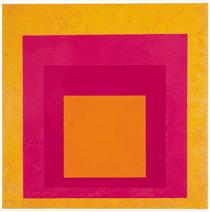
Home/Artists/ Constructivism /Josef Albers
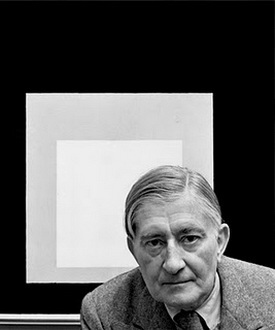
Josef Albers
Born:March 19, 1888; Bottrop, GermanyDied:March 25, 1976; New Haven, United StatesActive Years:1915 – 1976Nationality:GermanArt Movement:Constructivism, Concrete Art (Concretism), Abstract ArtPainting School:BauhausGenre:abstractField:painting, printmaking, design, photographyInfluenced by:Piet Mondrian, Wassily Kandinsky, Kazimir Malevich, Bauhaus, Suprematism, Futurism, Constructivism, ExpressionismInfluenced on:Ad Reinhardt, Kuno Gonschior, Samia HalabyArt institution:Akademie der Bildenden Künste München (Munich Academy), Munich, Germany, Black Mountain College, Black Mountain, NC, US, Yale School of Art (Yale University), New Haven, CT, USFriends and Co-workers:Paul KleeWikipedia:en.wikipedia.org/wiki/Josef_AlbersOfficial site:albersfoundation.org
ArticleWikipedia articleReferences
Josef Albers was a painter, poet, sculptor, and theoretician, best known for his iconic series of abstract paintings, the Homage to the Square series. He also was an educator whose work, both in Europe and in the United States, formed the basis of some of the most influential and far-reaching art education programs of the 20th century.
Born on March 19, 1888, in Bottrop, Germany, Albers enrolled as a student at the newly opened Bauhaus school in Weimar in 1920. The Bauhaus, which advocated for the synthesis of fine art and craftsmanship, soon became one of the most influential design schools in Germany. In 1922 Albers became a faculty member at the Bauhaus and was promoted to professor in 1925. Around this time, he also married Anni Fleischmann, who was a student at the school. During this period, Albers explored many different media like furniture design, glasswork, metalwork, typography, and photography. Some of his notable works from the time include sandblasted flashed glass artworks like Impossibles (1931) and Rolled Wrongly (1931). After the Nazi government closed the Bauhaus in 1933, Albers and his wife immigrated to the United States.
On the recommendation of architect Philip Johnson, both Albers and Anni were offered positions at the experimental Black Mountain College in North Carolina. He served as the head of the painting department between 1939-1949, and he taught the likes of Cy Twombly and Robert Rauschenberg. While he was teaching, Albers continued to develop his artistic practice. In 1947 he began working on the series Adobe/Variants, which was inspired by Mexican architecture. The series combined two characteristics of Albers’s art: his exploration of color theory and his background in design and architecture. Paintings from the series like Variant/Adobe: Familiar Front (1948) and Red Wall (1947-1956) explored how different colors interact when placed next to one another.
In 1950, Albers left Black Mountain College to head the design program at Yale University in New Haven, Connecticut. From this point, Albers mainly focused on two key series: Homage to the Square and Structural Constellation. In the series Structural Constellation, Albers created various compositions of rotationally straight lines, that can be described as two-dimensional renderings of three-dimensional objects. Structural Constellation deals with perceptual ambiguity: the artist’s carefully planned configurations like Structural Constellation: Alpha (1954) depict a floating geometric form that can simultaneously be viewed in multiple ways. From 1949 Albers began working on his signature series of prints and paintings, Homage to the Square. Paintings from the series like Homage to the Square: Apparition (1959) and Study for Homage to the Square: Departing in Yellow (1964) are based on a compositional scheme of squares in different colors and arrangements. Through the various examples in the series, Albers examined his color theory and how colors interact when placed next to one another. Correspondingly, he documented these effects in his writings, and in 1963, he published the book Interaction of Color (1963), which provided a complex explanation of principles of color theory. The book is considered a masterwork in art education, and it remains an essential source of color theory.
In the later stages of his career, Albers also created murals. In 1959, his mural Two Structural Constellations (1959) was engraved in the lobby of the Corning Glass Building in Manhattan. His monumental mural, Manhattan (1963), that was an homage to New York, was installed in the Pan Am Building in New York City. Albers died at the age of 88, on March 25, 1976, in New Haven, Connecticut.More …
Josef AlbersArtworks
- Grid Mounted Josef Albers • 1921
- Impossibles Josef Albers • 1931
- Graphic Tectonic Josef Albers • 1941
- Variant/Adobe: Familiar Front Josef Albers • 1948
- Homage to the Square (La Tehuana) Josef Albers • 1951
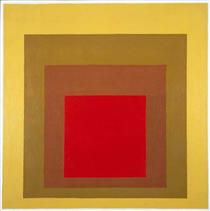 Homage to the Square Josef Albers • 1967
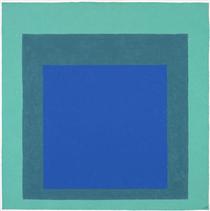 Homage to the Square Josef Albers • 1976
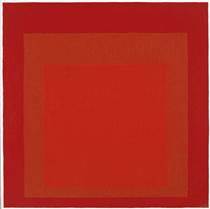 Study for Homage to the Square Josef Albers • 1972
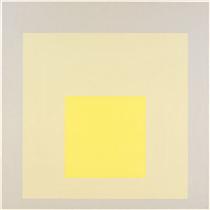 Homage to the Square: Amalgamating Josef Albers • 1971
.jpg!PinterestSmall.jpg) Homage to the Square: Broad Call Josef Albers • 1967
Homage to the Square: Broad Call Josef Albers • 1967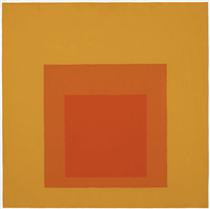 Homage to the Square Josef Albers • 1967
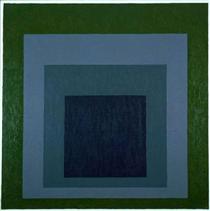 Homage to the Square Josef Albers • 1966
- Duo H Josef Albers • 1966
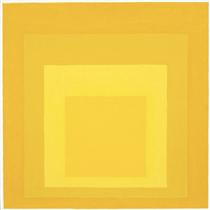 Homage to the Square Josef Albers • 1964
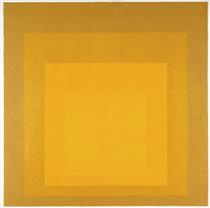 Study for Homage to the Square. Departing in Yellow Josef Albers • 1964
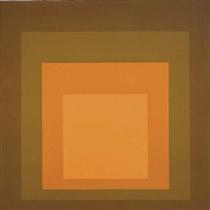 Homage to the Square: Autumn Climax Josef Albers • 1963
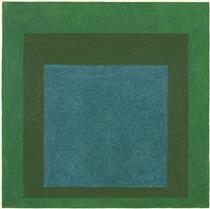 Homage to the Square Josef Albers • 1963
- Manhattan Josef Albers • 1963
 Stu
Stu