
Exhibition (Recontextualization Landscape Painting): Great Canadian Landscapes
Exhibition : Landscapes of Canada
An exhibition presenting abstract landscapes, of places I would like to visit in Canada. This work emulates the Group of Seven, except I am exploring Canada through the internet and my imagination of those places, to then translate those places into abstract paintings. These landscape paintings can be seen as surrealist works. A great part of Canadian identity is our landscape and relationship to the land. There is great energy and visceral beauty in the land.

Manitoulin Island, Ontario ( Canadian Landscape) , acrylic and gouache on paper, 6 in x 9 in, 2025 ( photographed + photoshop + reprinted giclee on paper, 24 in x 36 in, 30 in x 45 in, 36 in x 54 in , 2025)

Algonquin Provincial Park( Canadian Landscape), acrylic and gouache on paper, 6 in x 9 in, 2025 ( photographed + photoshop + reprinted giclee on paper, 24 in x 36 in, 30 in x 45 in, 36 in x 54in ,2025)

Bay of Fundy, New Brunswick/Nova Scotia,( Canadian Landscape). acrylic and gouache on paper, 6 in x 9 in, 2025 ( photographed + photoshop + reprinted giclee on paper, 24 in x 36 in,30 in x 45 in, 36 in x 54 in , 2025)

The Prairies, Saskatchewan / Manitoba,( Canadian Landscape), acrylic and gouache on paper, 6 in x 9 in, 2025 ( photographed + photoshop + reprinted giclee on paper, 24 in x 36 in, 30 in x 45 in, 36 in x 54 in ,2025)

The Northwest Passage, Nunavut, ( Canadian Landscape) acrylic and gouache on paper, 6 in x 9 in, 2025 ( photographed + photoshop + reprinted giclee on paper, 24 in x 36 in,30 in x 45 in, 36 in x 54 in , 2025)

Dinosaur Provincial Park( Canadian Landscape) , acrylic and gouache on paper, 6 in x 9 in, 2025 ( photographed + photoshop + reprinted giclee on paper, 24 in x 36 in,30 in x 45 in, 36 in x 54 in , 2025)

Nahanni National Park Reserve, Northwest Territories ( Canadian Landscape) , acrylic and gouache on paper, 6 in x 9 in, 2025 ( photographed + photoshop + reprinted giclee on paper, 24 in x 36 in,30 in x 45 in, 36 in x 54 in , 2025)

Gros Morne National Park, Newfoundland ( Canadian Landscape) , acrylic and gouache on paper, 6 in x 9 in, 2025 ( photographed + photoshop + reprinted giclee on paper, 24 in x 36 in,30 in x 45 in, 36 in x 54 in , 2025)

Great Bear Rainforest, B.C. ( Canadian Landscape) , acrylic and gouache on paper, 6 in x 9 in, 2025 ( photographed + photoshop + reprinted giclee on paper, 24 in x 36 in, 30 in x 45 in, 36 in x 54 in ,2025)

Canadian Badlands, Alberta( Canadian Landscape) , acrylic and gouache on paper, 6 in x 9 in, 2025 ( photographed + photoshop + reprinted giclee on paper, 24 in x 36 in, 30 in x 45 in, 36 in x 54 in ,2025)

Niagara Falls, Ontario ( Canadian Landscape) , acrylic and gouache on paper, 6 in x 9 in, 2025 ( photographed + photoshop + reprinted giclee on paper, 24 in x 36 in,30 in x 45 in, 36 in x 54 in , 2025)

Drumheller Alberta ( Canadian Landscape) , acrylic and gouache on paper, 6 in x 9 in, 2025 ( photographed + photoshop + reprinted giclee on paper, 24 in x 36 in,30 in x 45 in, 36 in x 54 in , 2025)

Drumheller Alberta ( Canadian Landscape) , acrylic and gouache on paper, 6 in x 9 in, 2025 ( photographed + photoshop + reprinted giclee on paper, 24 in x 36 in,30 in x 45 in, 36 in x 54 in , 2025),2025)

Banff National Park, Alberta( Canadian Landscape), acrylic and gouache on paper, 6 in x 9 in, 2025 ( photographed + photoshop + reprinted giclee on paper, 24 in x 36 in, 30 in x 45 in, 36 in x 54 in ,2025)

Red Coast, Prince Edward Island ( Canadian Landscape) , acrylic and gouache on paper, 6 in x 9 in, 2025 ( photographed + photoshop + reprinted giclee on paper, 24 in x 36 in,30 in x 45 in, 36 in x 54 in , 2025)

Athabasca Sand Dunes ( Canadian Landscape) , acrylic and gouache on paper, 6 in x 9 in, 2025 ( photographed + photoshop + reprinted giclee on paper, 24 in x 36 in, 30 in x 45 in, 36 in x 54 in ,2025)

The Valley of Ten Peaks, Banff Alberta ( Canadian Landscape) , acrylic and gouache on paper, 6 in x 9 in, 2025 ( photographed + photoshop + reprinted giclee on paper, 24 in x 36 in, 30 in x 45 in, 36 in x 54 in ,2025)

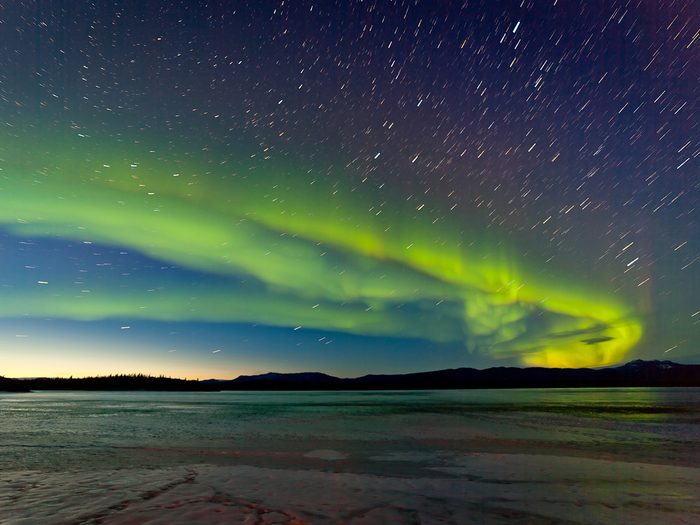
Aurora Borealis, Manitoba ( Canadian Landscape) , acrylic and gouache on paper, 6 in x 9 in, 2025 ( photographed + photoshop + reprinted giclee on paper, 24 in x 36 in,30 in x 45 in, 36 in x 54 in , 2025)



CANADIAN LANDSCAPES
As the world’s second-largest country, Canada is home to many stunning locales, ranging from large metropolises and iconic national parks to quaint small towns and remote islands. With so many options, narrowing down the ultimate Great White North itinerary can feel overwhelming.
To help you make the most of your trip, Jessica Renshaw, a travel advisor at Renshaw Travel, recommends working with a professional who, like her, specializes in all things Canada. She notes, for instance, that “certain locations in Canada are best to self-drive, while others will [require] you to access remote wilderness, either by seaplane or charter plane.”
With that in mind, here’s our list of the most beautiful places in Canada, including recommendations from Renshaw and five other travel experts.
01of 25
Niagara Falls, Ontario
:max_bytes(150000):strip_icc()/TAL-niagra-falls-BEAUTYCANADA0623-81c09c5d99fe4bbeb58ba80a39effb20.jpg)
“Niagara Falls is such a quintessential travel destination, it almost feels campy,” says Fora Travel co-founder and advisor Henley Vazquez, “but the falls are incredible.“ It’s actually composed of three separate waterfalls—Horseshoe Falls (also called Canadian Falls), American Falls, and Bridal Veil Falls—and the best way to see them is by boat. Alternatively, adventure seekers can tie their laces tight and follow one of the hiking trails for postcard-worthy views of the falls.
02of 25
Joffre Lakes Park, British Columbia
:max_bytes(150000):strip_icc()/TAL-joffre-lake-park-BEAUTYCANADA0623-80703e77bd9d4aa3b9dad5ba45cd75df.jpg)
With ice-capped peaks and turquoise-hued lakes, Joffre Lakes Park in British Columbia is a sight to behold. “Hike Joffre Lakes Trail, and make sure to go to the top so you don’t miss the beauty of all three lakes,” says Fora travel advisor, Dahlia Swerdloff. In colder months, the park transforms into a snow globe-esque winter wonderland with myriad skiing and snowshoeing opportunities.
03of 25
Clayoquot Sound, British Columbiaacrylic and gouache on paper, 6 in x 9 in, 2025 ( photographed + photoshop + reprinted giclee on paper, 24 in x 36 in, 2025)

Top 12 Canadian Natural Wonders
By Lisa Kadane
Published Feb 10, 2025
11 min read
See the natural wonders of Canada on a train vacation across the country. Many travelers come to Canada for its stunning natural beauty and pristine wilderness. Nearly every landscape on Earth can be found within its borders, from desert to rainforest to high arctic. Waterfalls, mountains, prairies, boreal forest, glacial lakes — Canada has it all.

Since 1996, the travel experts at Canadian Train Vacations have been helping guests to Canada plan their perfect trip. Each itinerary is personalized to your needs and interests — you can choose your train experiences, hotel accommodations, activities, and tours. Visits to many Canadian natural wonders, like Niagara Falls and Banff National Park, are included in our itineraries.
Unique Characteristics of Canadian Landscapes
Canada’s natural landscapes, stretching across nearly 10 million square kilometres, offer a breathtaking display of geographic diversity. From the soaring peaks of the Rocky Mountains in the west, reaching heights of over 3,000 metres, the serene lakes of the ancient Canadian Shield in the east, and the picturesque coasts of the Maritimes, each region has its own allure.
[ Read: Best Time to go to Maritimes ]
The country boasts a network of over 40 national parks and reserves, including UNESCO-listed sites like Nahanni National Park Reserve and other Canadian wonders. These protected areas safeguard the country’s rich ecosystems. In the northern parts of Canada, the Northern Lights (Aurora Borealis) grace the skies over 200 days annually.
While there are many natural attractions in Canada, some are more famous than others. Niagara Falls, the Rockies, the Cabot Trail, Nahanni National Park Reserve, the Northern Lights, and the Bay of Fundy are among the top 7 natural wonders of Canada. Landscapes in Canada are varied, so it’s worth visiting different provinces and regions.
[ Read: When did Canada become a Country ]
1. Niagara Falls, Ontario
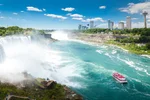
Niagara Falls is one of the most well-known natural landmarks in Canada. Straddling the border between Canada and the United States, Niagara Falls churns 7,500 bathtubs worth of water over its brink every second, making it the world’s second largest waterfall by volume. It’s not as high as Angel Falls nor as wide as Victoria Falls, but, thanks to the Great Lakes that feed it, it’s much wetter. Niagara Falls creates a constant mist, a deafening roar and an eternal rainbow that shifts between the two countries.
The spectacle is mesmerizing, and it’s easy to understand why this wonder of nature has drawn daredevils, honeymooners and tourists for the past 200 years. Get close to the falls on a thrilling Hornblower cruise or take the Journey Behind the Falls tour, which leads you to two outdoor observation decks. When you’ve had your fill of water, there are lots of other things to do in Niagara Falls like head to some of the 160 wineries on the Niagara Peninsula, go for a hike in Niagara Glen, or browse the boutiques in charming Niagara-on-the-Lake.
[ Read: How to Plan a Trip to Niagra Falls ]
Quick Facts:
- Niagara Falls is three waterfalls: American Falls, Bridal Veil Falls, and Horseshoe Falls
- During peak season, 168,000 cubic metres of water (6 million cubic feet) go over Horseshoe Falls every minute
#1 Travel tip: New Niagara Falls attraction
Get a whole new view of the falls at the Niagara Parks Power Station, where you can explore a 2,200-foot long historic tunnel to an observation deck at the river’s edge.
Carolyn Camilleri
Travel Writer
2. Banff National Park, Alberta
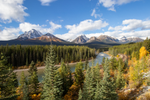
Some of the best nature in Canada can be found in the four Canadian Rockies national parks, including Banff National Park.
With alpine lakes as blue as Switzerland’s, and mountains to rival the Matterhorn, there’s no need to travel to the Alps when you can have a Rocky Mountain high that makes you want to yodel in Canada. It’s not just the scenery that conjures Switzerland, but Banff National Park’s history, too.
[Read: Best time to go to Banff ]
Between 1899 and 1954, the Canadian Pacific Railway recruited Swiss guides to work for its luxurious railway hotels, including the Banff Springs Hotel and the Château Lake Louise. They guided first ascents of nearby peaks, taught climbing techniques to newbie mountaineers, and led tourists on hikes and horse trips into Banff National Park. You can still join guided hikes at Lake Louise, such as the iconic trek up to the Plain of the Six Glaciers and an adorable alpine tea house built by Swiss guides in 1924. Other popular activities in Banff in the summer include canoeing, wildlife viewing, and horseback riding. During the winter season, you can go skiing, snowshoeing, ice skating, and more.
Quick Facts:
- Banff is Canada’s first National Park and was established in 1885
- There are more than 1,000 miles of hiking trails in Banff National Park
- Banff National Park covers 6,641 square kilometres (2,564 square miles)
[ Read: Facts about Banff National Park ]
Get free travel guides and tips!
Receive travel guides, travel tips, new trip details, and exclusive offersEmail
By submitting this form, you agree to our collection and use of your personal data as detailed in our Privacy Policy. Your information will be used to process your request and improve our services.
3. Aurora Borealis, Manitoba
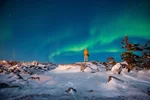
You can see many natural wonders in Canada, including the Northern Lights. Galileo named the Northern Lights after Aurora, the goddess of the dawn, and Boreas, the wind of the north. They appear as a dream in the middle of the night—a kaleidoscope of phosphorescent green, yellow, pink and magenta that shimmers and dances across the sky in what can only be described as nature’s fireworks display.
Though the Aurora Borealis can be seen in many northern countries, from Iceland to Russia, Churchill in Manitoba is considered one of the best places in the world to see the charged particles of light hitting the Earth’s atmosphere, with best viewing between November and March. In the fall, the area is also known as the Polar Bear Capital of the World.
[ Explore: Best Places to See Northern Lights in Canada ]
Quick Facts:
- Aurora activity occurs around 300 nights per year in Churchill
- You are more likely to see the Northern Lights when there are clear, dark skies
- Other top Canadian destinations for Northern Lights viewing include Yellowknife (Northwest Territories) and Whitehorse (Yukon)
4. The Cabot Trail, Nova Scotia
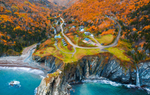
Considered one of North America’s most scenic drives, The Cabot Trail winds 298 km around Cape Breton, an island off the coast of Nova Scotia. It rolls over rounded hills, and through lush valleys and Cape Breton Highlands National Park, often hugging the coast with dramatic views of the Atlantic Ocean and rugged beaches below.
Every autumn, The Cabot Trail’s fall colours wow when the island’s forests of sugar maples, yellow birch, American beech and tamaracks turn into a quilt of vivid red, purple, orange, yellow and green. Not only are leaf peepers rewarded at every turn with postcard vistas that rival Vermont’s, there are plenty of other things to do in Cape Breton including scenic strolls, sampling craft beer or staying at a cozy inn.
Quick Facts:
- The Cabot Trail covers 298 kilometres (185 miles) on Cape Breton Island
- It takes about five hours (without stops) to drive the length of the Cabot Trail
[ Read: Best Time to visit Nova Scotia ]
5. Great Bear Rainforest, B.C.
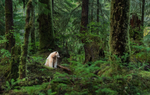
You won’t find any anacondas creeping through the undergrowth here, but you may stumble across slugs the size of chocolate bars in the Great Bear Rainforest, also called the Amazon of the North. This 21-million-acre protected coastal temperate rainforest in northern B.C. wows with 1,000-year-old Western red cedars, glacier-cut fjords and rare sightings of the cream-coloured Kermode bear or Spirit bear, which is actually a black bear with a recessive gene that turns its coat almost white. You can also spot sea otters and orcas from a kayak, or go with a guide to seek out the grizzly bears that congregate by coastal rivers to feast on Coho during the salmon run every fall. By night, slumber in a remote lodge and listen for the eerie howl of gray wolves.
Quick Facts:
- The Great Bear Rainforest stretches across 21 million acres (6.4 million hectares)
- It stretches for 402 kilometres (250 miles) along the coast of British Columbia
- It is one of the largest temperate rainforests in the world
- The region receives substantial rainfall, with some areas receiving over 2-4 metres (6-13 feet) of rain annually
6. The Northwest Passage, Nunavut
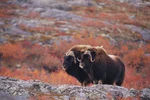
History and mystique merge along the dramatic waters of The Northwest Passage. For centuries, this fabled route — which connects the Atlantic and Pacific Oceans through the Arctic Ocean above Canada — attracted explorers looking for a shortcut to the riches in Eastern Asia. For modern-day voyagers, there’s plenty to discover along this frozen realm, with its glaciers, scenic fjords and inlets, ice caves, rocky spires and drifting icebergs. The ice-strewn waters are home to thick-billed murres, ivory gulls, beluga and bowhead whales. You may even spot a narwhal, the unicorn of the sea.
Quick Facts:
- The Northwest Passage is a historic and navigable sea route through the Arctic Ocean. It extends about 1,450 kilometres (900 miles)
- In 1906, Norwegian explorer Roald Amundsen became the first to navigate the entire Northwest Passage, a journey that took him three years
[ Read: Best Time to visit Canada ]
7. Columbia Icefields, Alberta
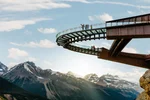
One of the amazing natural attractions in Canada is the Columbia Icefields.
Glacier-capped peaks are strung like pearls along the length of the Icefields Parkway, a 232-km drive between Lake Louise and Jasper that passes through two national parks in the Canadian Rockies. The stars of the drive are, of course, the Columbia Icefields, an enormous glacial ice cap whose frozen blue tongues lick down between the rocky spires and are easily accessible from the road. It’s the world’s largest collection of glaciers—there are more than 100—south of the Arctic Circle (no need to travel to Greenland after all).
[ Read: Things to do in Jasper National Park ]
Hike up Parker Ridge for a drones-eye view of the Saskatchewan Glacier, the region’s longest, or ride a snowcoach onto the Athabasca Glacier for a guided walk atop the shifting ice. You can also fly over the Columbia Icefields in a helicopter, or get a dizzying view from the Columbia Icefield Skywalk.
Quick Facts:
- The Columbia Icefields covers an area of approximately 325 square kilometres (125 square miles) and straddles the border between Alberta and British Columbia
- In some areas, the ice in the Columbia Icefields is estimated to be as deep as 365 metres (1,200 feet)
- The icefield is the primary source of several major glaciers and rivers in the region, including the Athabasca River, which flows eastward through Jasper National Park
#2 Travel tip: Drive the Icefields Parkway
The best way to transfer between Banff and Jasper is on a small guided tour through the Icefields Parkway. Stops include the Athabasca Glacier, the Skywalk and various waterfalls.
Katherine Foxcroft
Product Manager, Tours and Vacations
8. Nahanni National Park Reserve, Northwest Territories
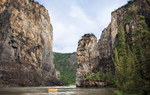
From the top of the Ram Plateau, a table of dolomite rock surrounded by the Mackenzie Mountains, you’d be forgiven for thinking you were in the Grand Canyon. Here in Nahanni National Park Reserve, one of Canada’s UNESCO World Heritage Sites, the earth gives way to a series of plunging canyons hemmed in by eroded buttes and mesas that look eerily like the American Southwest.
This incredible landscape is one reason people travel to the Northwest Territories. The other is to raft the South Nahanni, a Canadian Heritage River with rapids, a riverside hot springs, a waterfall twice the height of Niagara Falls, and the chance to see wildlife such as bears, caribou and dall sheep. Add in the towering, jagged peaks that mark the Cirque of the Unclimables, and you’ll want to add the Nahanni to your bucket list.
Quick Facts:
- One of the park’s most famous features is Virginia Falls. Virginia Falls plunges down approximately 96 metres (315 feet), making it one of the highest waterfalls in Canada
- The park is home to some of the deepest canyons in North America, with depths reaching up to 1,000 metres (3,280 feet)

Download our Brochures and Mini Guides
9. Gros Morne National Park, Newfoundland
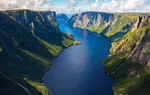
One of Canada’s most iconic views is from the top of Western Brook Pond fjord in Newfoundland. Gazing out you’ll see flat-topped mountains slope into green-robed cliffs that dramatically meet the sea. It looks just like Trolltunga, Norway’s Instagrammable fjord—minus the rock outcrop for dangerous selfies and the grueling 12-hour hike to get there. In Gros Morne, named for the province’s second highest peak, the views are a little more accessible. To get this snap it’s a short walk to the dock, a boat ride to the mouth of the fjord, and a four-hour hike to the top of the gorge—you’ll be back in time for a beer at the pub, and be ready to explore the rest of the park’s incredible landscape the following day.
Quick Facts:
- Gros Morne National Park was established in 1973, making it over 50 years old. It was designated as a UNESCO World Heritage Site in 1987
- The park covers approximately 1,805 square kilometres (697 square miles). The vast expanse of wilderness includes fjords, mountains, forests, and unique geological features
- The park’s namesake, Gros Morne Mountain, stands at an elevation of 806 metres (2,644 feet) above sea level
[ Read: Best Places to visit in Canada during Summer ]
10. Canadian Badlands, Alberta
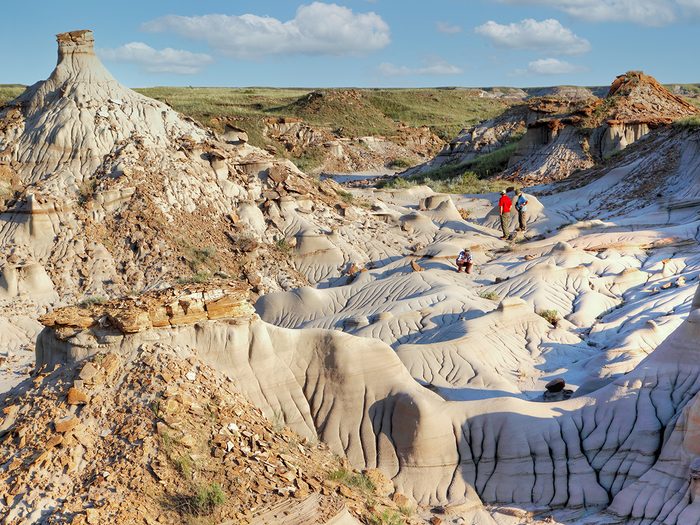
Near Drumheller, flat prairie abruptly gives way to a surreal landscape of erosion-carved valleys called coulees and whimsical, capped rock formations called hoodoos. The region is known as the badlands, so named by French trappers who stumbled across similar geography in South Dakota and found themselves lost in dead-end box canyons—they began referring to that area as “mauvaise terres a traverser,” which translates to “bad lands to cross.” The name stuck.
Hidden beneath the rugged dunes and buttes of the Red Deer River Valley lie the fossilized remains of the dinosaurs that turned Drumheller and nearby Dinosaur Provincial Park into a tourist destination. When you get your fill of the otherworldly scenery in Horseshoe Canyon, one of the top things to do in Drumheller is to visit the Royal Tyrrell Museum of Paleontology (a.k.a. “dinosaur museum”) for a dino education.
Quick Facts:
- The Canadian Badlands are renowned for their unique geological formations. These formations, including hoodoos (tall, thin rock spires), canyons, and sedimentary layers, date back as far as 70 million years
- The Canadian Badlands span 7,700 square kilometres (3,000 square miles) in southeastern Alberta
- It’s estimated that some dinosaur fossils found in this area are 75-77 million years old
[ Read: Things to Do in New Brunwick for Free ]
11. Bay of Fundy, New Brunswick/Nova Scotia
The Bay of Fundy, situated between New Brunswick and Nova Scotia, is renowned for having the highest tides on earth, with tidal ranges rising to 16 metres (54 feet). The tides, a result of the bay’s funnel-like shape, create a dynamic ecosystem.
[ Read: Best Time to Visit Brunswick ]
You can witness the mesmerizing phenomenon of the reversing falls in Saint John, where the river flow changes direction with the tides. In St. Martins, sea kayaking adventures take you past the dramatic red rock cliffs to sandstone sea caves. At low tide, you walk along the sea floor to further explore these sea caves. Other activities in the Bay of Fundy region include whale-watching tours, bird watching, hiking along scenic coastal trails, and discovering charming fishing villages.
Quick facts:
- The Bay of Fundy is famous for having the highest tides in the world
- The Bay of Fundy is not only known for its tides but also for its rich marine biodiversity. It serves as a critical feeding and breeding ground for various species of whales, including humpback, minke, and the endangered North Atlantic right whale
[ Read: What to do in Nova Scotia ]
12. Red Coast, Prince Edward Island
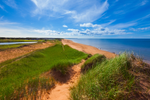
With its striking red sandstone cliffs, the Red Sands Shore region of Prince Edward Island is a captivating destination that showcases the island’s distinctive charm. The rich red soil, a resort of iron oxide deposits, provides a stunning contrast to the vivid blue waters of the Gulf of St. Lawrence. The area is steeped in history, with picturesque lighthouses guiding ships along its rugged coastline. It’s one of the most beautiful natural places in Canada.
Book lovers will not want to miss a visit to the historic Green Gables Heritage Place, an inspiration for Lucy Maud Montgomery’s beloved novel. You can delve deeper into the island’s cultural heritage at museums like the Acadian Museum in Miscouche.
Quick Facts:
- Some of the cliffs on the Red Coast of Prince Edward Island rise to an impressive height of 20 metres (65 feet)
Final Thoughts
The natural features of Canada are nothing short of awe-inspiring. From the towering peaks of the Canadian Rockies and the expansive boreal forests to the rugged coastlines of the Atlantic and Pacific, Canada’s natural beauty is truly remarkable. In this article, we have covered a small selection of Canada’s natural wonders, some of which can be seen by train travel. Contact the experts at Canadian Train Vacations for more information on train trips in Canada.
Share
About the author: Lisa Kadane is a travel journalist based in Kelowna. Her writing has been published in BBC Travel, CNN Travel, enRoute Magazine, and more. Highlights of her adventures in Canada include joining a polar bear safari in Churchill, heli-hiking in the Bugaboos,… Read more
Canada’s Most Awe-Inspiring Natural Wonders
By Daniel Reid, readersdigest.ca
These sights will take your breath away—and stay with you for the rest of your life.
1/10
Pi-Lens / Shutterstock.com
Top 10 Natural Wonders of Canada
The Northern Lights
Like an ever-changing oil painting, with broad strokes of green coalescing with splotches of gold and pulses of red, it’s impossible not to be mystified by the northern lights. These natural wonders of Canada, also known as the Aurora Borealis, are a phenomena in which electrically charged particles collide with gases in the Earth’s atmosphere causing them to glow. And they’re just as spectacular as they sound. This otherworldly light show can be seen anywhere in the aurora oval: a region centred over each magnetic pole where the lights occur with the greatest intensity. Check out the best places to see the northern lights in Canada.
2/10
Jennifer Reeson-Ho / Shutterstock.com
Cathedral Grove
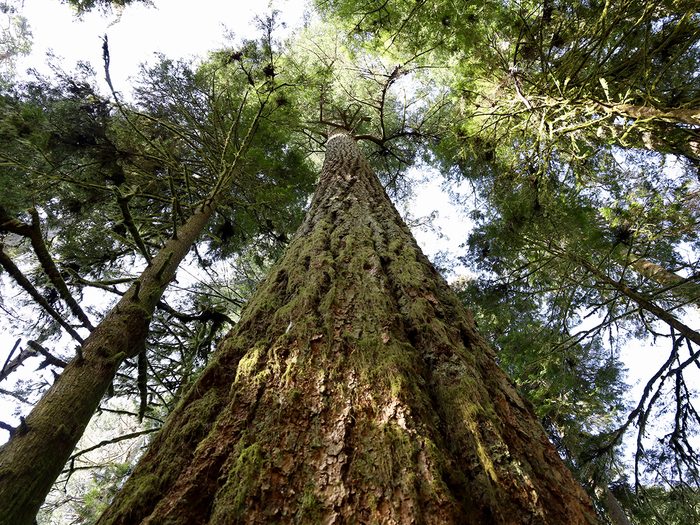
Looking for a big cuddly tree to hug? This old growth forest on Vancouver Island might be the place for you. Just don’t expect to get your arms all the way around the trunk of an ancient Douglas fir tree. Some trees in Cathedral Grove, a cluster of the giant variety of trees in MacMillan Provincial Park, are 800 years old and measure as much as nine metres in circumference. How’s that for a cuddle partner?
Here’s where you’ll find the oldest trees in Canada.
3/10
Ronnie Chua / Shutterstock.com
Dinosaur Provincial Park
Whether you’re a natural history buff or just a Jurassic Park fan, you’re bound to be thrilled by a walk through Alberta’s Dinosaur Provincial Park, also known as one of the world’s biggest dinosaur graveyards. Seventy-five million years ago, southern Alberta was a thriving hub of pre-historic life which included fish, amphibians, reptiles, primitive mammals and dinosaurs. When many of these animals died in river channels and mud flats, their bones were buried in layers of sand and mud and eventually fossilized. In addition to nearly 500 species of animal life, Dinosaur Provincial Park’s fossil assemblage includes an astounding 40 species of dinosaurs, not to mention more than 500 dinosaur specimens.
Check out more great places to see dinosaur fossils in Canada.
4/10
Jeff Whyte / Shutterstock.com
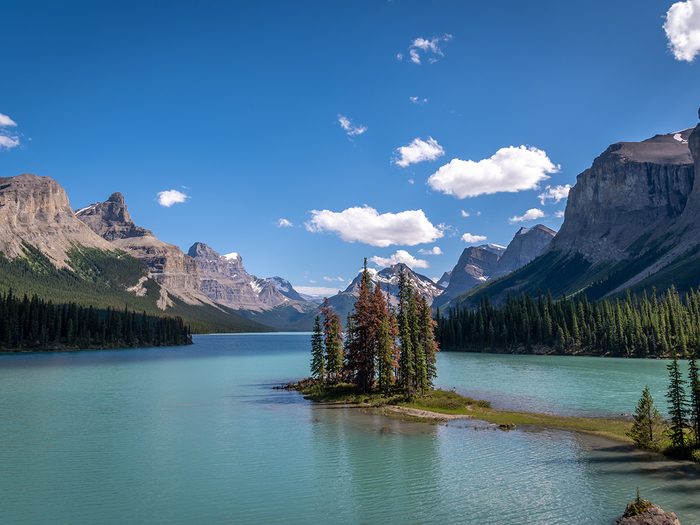
The Canadian Rockies
Turquoise water, vast expanses of unblemished wilderness, snow-capped mountains: there are few places more iconically Canadian than the Rockies. Whether you’re visiting one of its four national parks, skiing or snowboarding at world-renowned resorts or simply passing through on an unforgettable train ride, the beauty of this region is impossible to ignore. It’s no surprise most of the Canadian Rockies are designated a UNESCO World Heritage Site and draw millions of visitors every year.
Don’t miss our guide to all 20 UNESCO World Heritage Sites in Canada.
5/10
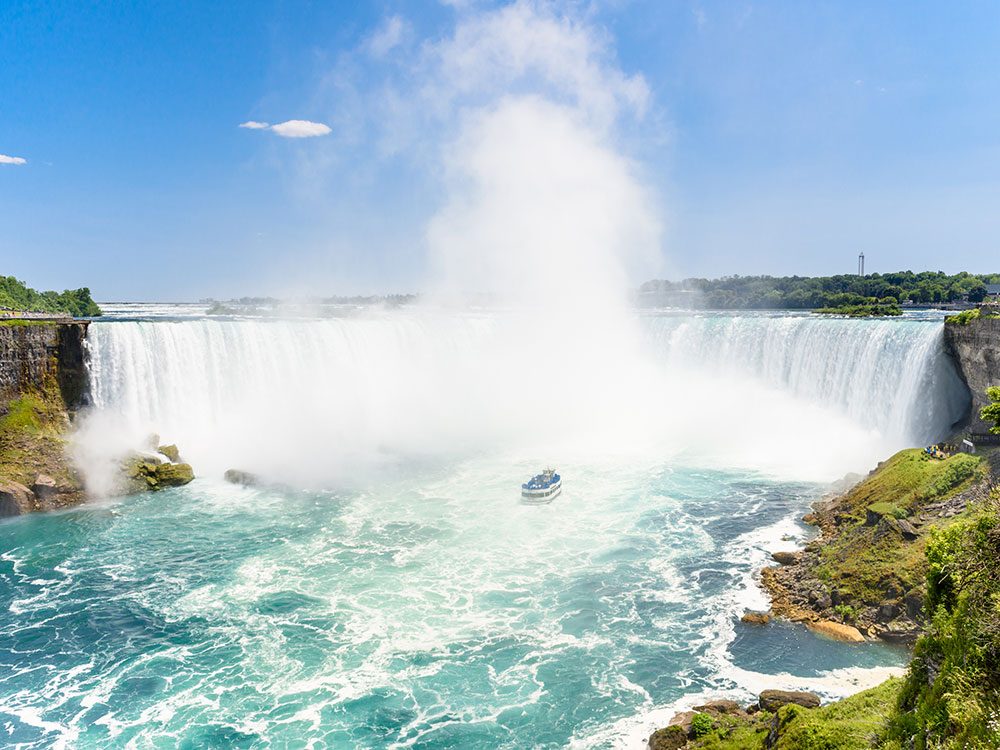
Photo: Shutterstock
Niagara Falls
If you haven’t seen North America’s most powerful waterfall with your own eyes, it’s almost impossible to imagine it. First, picture 84-million 2-litre bottles of water. Now, imagine all that water—168,000 cubic metres—flowing over the crest of the falls every minute. Mind-boggling, isn’t it? It’s no wonder Niagara Falls, which consists of three waterfalls called the Horseshoe Falls, the American Falls and the Bridal Veil Falls, is one of the most famous natural wonders in the world. The only downside? We have to share this wonder with our neighbours to the south—one-third of Niagara falls is on the American side of the border.
Discover 10 unique things to do in Niagara Falls.
6/10
Ken Morris / Shutterstock.com
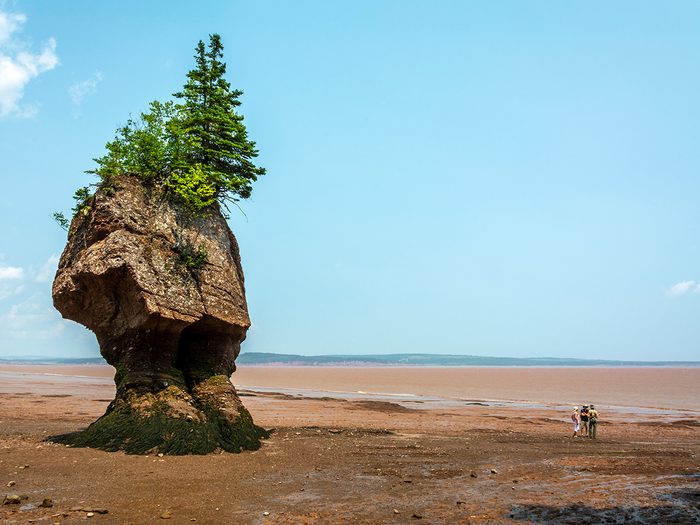
Hopewell Rocks
Not much of a swimmer? Why not explore the bottom of the ocean without the need for a scuba mask and oxygen tank? Every day, 100 billion tonnes of water empty out of the Bay of Fundy, allowing visitors the chance to walk along the ocean floor at New Brunswick’s Hopewell Rocks and admire bizarre rock formations like sculptures in a gallery. At high tide, the Atlantic’s water level rises by about 16 metres almost completely submerging everything again (save for the tips of some of the rocks), making this one of the most impressive natural wonders of Canada.
Check out more essential experiences on the east coast of Canada.
7/10
Russ Heinl / Shutterstock.com
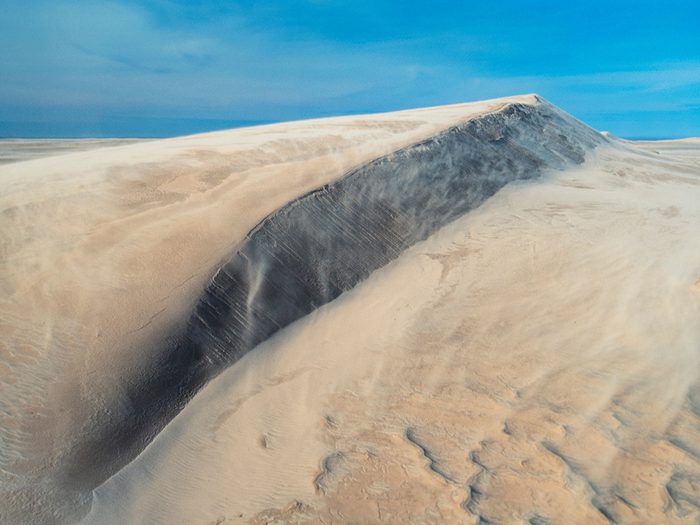
Athabasca Sand Dunes
If it feels like you’re standing on another planet at the Athabasca Sand Dunes, it’s with good reason. The towering dunes—some as high as 30 metres—are part of the largest active sand surface in the country, extending approximately 100 kilometres along the south shore of Lake Athabasca in Saskatchewan. Protected with a provincial park designation, this other-worldly ecosystem is home to rare plants, and geological features like eskers. What makes this site even more unique in our roundup of natural wonders of Canada is that it takes a bit of determination (and wilderness camping experience) to get there: The park is only accessible by float plane. For those lucky few, be prepared for a sight like no other. —Erica Ngao
Never heard of this natural wonder? Discover more mind-boggling Canadian geography facts.
8/10
Prashanth Bala / Shutterstock.com
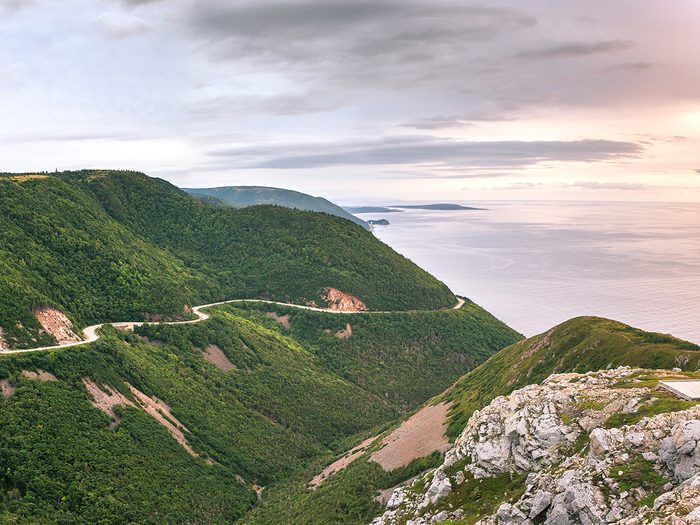
The Cabot Trail
Winding roads that hug the coastline, soaring cliffs, deep valleys, lush forests—the Cabot Trail really has it all. The best part? You don’t even have to get out of your car to enjoy it. The roadway takes drivers on a scenic loop around the northern tip of Cape Breton and through the Cape Breton Highlands National Park—298 kilometres in total. While this distance could easily be travelled in a short road trip, travellers often spend days on the winding route taking in the natural wonders and exploring hiking trails.
Here are 10 Canadian road trips you need to take at least once.
9/10
Aivoges / Shutterstock.com
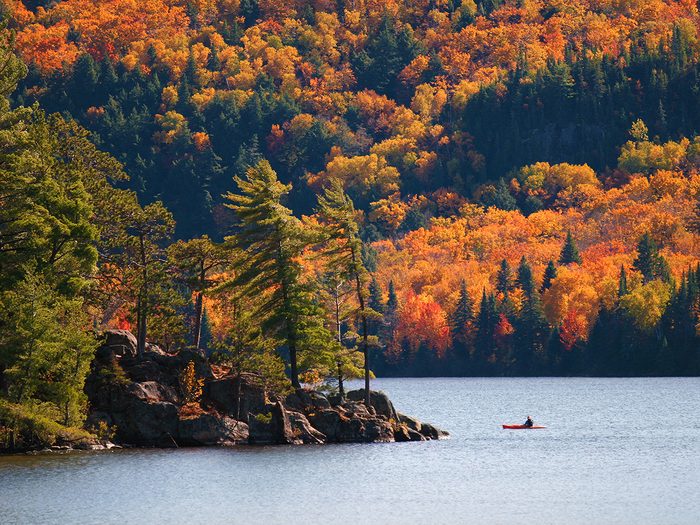
Algonquin Provincial Park
With the sun poking up over a panorama of treetops, seemingly setting the skyline on fire with broad strokes of orange, and waves gently lapping against the bow of your canoe, it’s not hard to imagine why Canada’s oldest provincial park is also one of the most inspiring natural wonders of Canada. It’s the place where the Group of Seven, Canada’s most famous painters, did most of their work. It’s also an escape for millions of campers, hikers and paddlers each year, trading the bustle of city-life for utter solitude in the pristine wilderness.
Here are 10 national parks every Canadian should visit.
10/10
RUBEN M RAMOS / Shutterstock.com
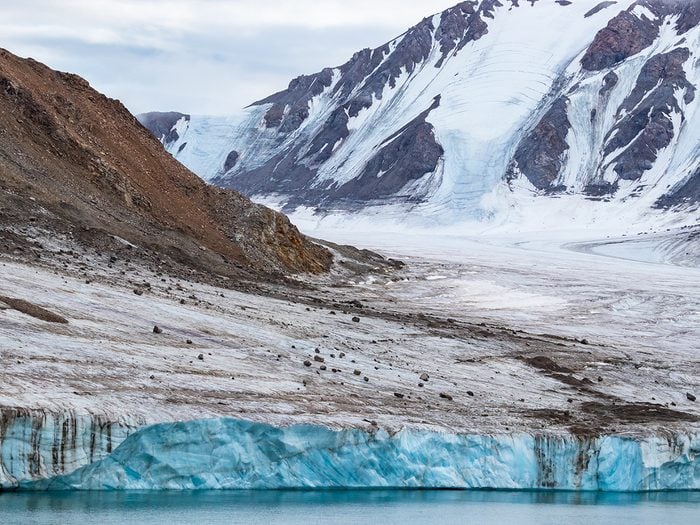
Ellesmere Island
With an average yearly temperature of about -20 C, it’s hard to imagine Ellesmere Island being anything but cold. Really, really cold. But remarkably, about 55 million years ago, this island in Canada’s high Arctic was once home to a wetland forest with palm trees, down redwoods, bald cypress and cycads, not to mention warm temperatures. The stumps of many of these trees have been preserved in a remarkable fossil forest, helping scientist study what life was like in the Arctic just before the beginning of the Ice Age.
Now that you’ve added these natural wonders of Canada to your bucket list, take a closer look at Canada’s most beautiful waterfalls.
GROUP OF SEVEN
THE CANADIAN EN
Article
Group of Seven
Article by Christopher Varley, Russell Bingham
Updated by Andrew McIntosh
Published Online July 11, 2013
Last Edited November 14, 2019
The Group of Seven, also known as the Algonquin School, was a school of landscape painters. It was founded in 1920 as an organization of self-proclaimed modern artists and disbanded in 1933. The group presented the dense, northern boreal forest of the Canadian Shield as a transcendent, spiritual force. Their depictions of Canada’s rugged wind-swept forest panoramas were eventually equated with a romanticized notion of Canadian strength and independence. Their works were noted for their bright colours, tactile paint handling, and simple yet dynamic forms. In addition to Tom Thomson, David Milne and Emily Carr, the Group of Seven were the most important Canadian artists of the early 20th century. Their influence is seen in artists as diverse as abstract painter Jack Bush, the Painters Eleven, and Scottish painter Peter Doig. 
Group of Seven Members
Members of the Group of Seven at the Arts & Letters Club in Toronto, clockwise from the left: A.Y. Jackson, Fred Varley, Lawren Harris, Barker Fairley, Franz Johnston, Arthur Lismer and J.E.H. Macdonald.
(courtesy Art Gallery of Ontario)
Members
The original members of the Group of Seven were Franklin Carmichael, Lawren Harris, A.Y. Jackson, Franz Johnston, Arthur Lismer, J.E.H. MacDonald and F.H. Varley. Tom Thomson was a peer and a leading influence but died before the group was formed. All except Harris made their living as commercial artists. MacDonald, Lismer, Varley, Carmichael, Johnston and Thomson worked together at Grip Ltd., a graphic design firm in Toronto. Harris, as heir to the agricultural implements manufacturer Massey-Harris Co. Ltd., was independently wealthy.
In 1926, after Franz Johnston’s resignation A.J. Casson was made a member. The Group realized they could hardly call themselves a national school of painters as long as they all lived in Toronto. They admitted Edwin Holgate of Montreal in 1930 and L.L. FitzGerald from Winnipeg in 1932. This gave the organization a wider geographic base.
Emily Carr, famous for her paintings of the wilderness and Indigenous culture of the Northwest Coast, was influenced by the Group, and particularly by Lawren Harris. He once declared to her, “You are one of us.” However, she was never an official member.
Background
Four decades after Confederation, when the Group of Seven came on the scene, Canada was finding its feet as a nation — politically, socially and economically. In the realm of culture, however, it had not yet wrested its independence from Old World traditions. Canadian landscape art consisted primarily of anonymous views seen through the cloudy screen of European academia. (See also: Canadian Painting in the 19th Century.) The small community of Canadian art collectors had little interest in artistic innovation.
In this atmosphere, a group of painters and commercial artists befriended each other in Toronto between 1911 and 1913. They were drawn together by a common sense of frustration with the conservative quality of most Canadian art. They began meeting as a kind of mutual support group, often having lunch together at the Arts and Letters Club of Toronto. They would look at one another’s paintings, share ideas and discuss technique.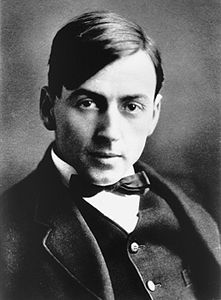
Tom Thomson
With his instinctive technical abilities and his intense love of the North, Tom Thomson had all the elements necessary to become a great painter.
(courtesy Library and Archives Canada/C-17399)
Tom Thomson
Since Thomson died in 1917, he never became a member of the Group. However, he was an important influence on the other artists and had a profound effect on the formation of the group. A fishing guide and occasional forest ranger in Algonquin Provincial Park, he was an avid outdoorsman. He encouraged the other members to paint the rugged landscape of Northern Ontario. It was here they found the imagery that would imprint itself on the Canadian consciousness.
Key Influences
Despite their emphasis on the need for a specifically “native” expression, the Group was aware of and drew inspiration from French Post-Impressionists, such as Vincent Van Gogh and Paul Gauguin. Other post-impressionists, such as Edvard Munch and Émile Bernard, were also key influences.
However, the turning point in their search for a style came in 1912, when MacDonald and Harris travelled to Buffalo to see an exhibition of contemporary Scandinavian painting. The men were struck by the approach of the Scandinavians. They used simple areas of flat, bright colour to create vivid depictions of a landscape. Macdonald and Harris realized that the subjects of these paintings could as easily have been Canada’s Northern wilderness. The synthesis of Northern subject with this new approach created the distinctive images that would become the hallmark of the Group of Seven.
Canal du Loing near Episy
A.Y. Jackson, 1909, oil on canvas.
(courtesy NGC)
Career Highlights
The members of the Group were not exclusively landscape painters. It was only after their first exhibition at the Art Gallery of Toronto (now the Art Gallery of Ontario) on 7 May 1920 that they began to identify themselves as a landscape school.
The members of the group were romantic, with mystical leanings. They zealously presented themselves as Canada’s first national school of painters. This provoked the ire of the artistic establishment, which hated their rhetoric even more than their paintings.
From the start, the Group’s exhibitions sparked controversy. (One review of their first exhibition compared the works to “the contents of ‘a drunkard’s stomach.’”) If anything, it was this heated debate that kick-started their fame. The negative reviews and letters to the editors received clever and passionate responses from the painters and their supporters. The discussion was always directed to the importance of their work as the product of true nationalistic expression.
Snow Clouds
Franklin Carmichael, 1938, oil on canvas.
(courtesy Franklin Carmichael/NGC)
Eric Brown, director of the National Gallery of Canada, always supported the Group. He began buying their paintings for the gallery’s collection several years before the Group was officially formed. In 1924 and 1925, he made sure they were well represented in Canadian art shows at the prestigious Wembley exhibition in England. This enraged many members of the Royal Canadian Academy, who felt that the Group were given an unfair advantage. However, British press reports were so favourable that both Brown and the Group felt vindicated.
Other factors also contributed to their success. Several of the Group were excellent teachers, writers and speakers. They worked energetically with the National Gallery and with other groups to mount touring exhibitions that showcased their works. Shows were held in the United States, Great Britain and Paris. Another factor in their favour was that the bright colours and bold patterning of their paintings were ideally suited to reproduction and mass distribution.
With the support of the National Gallery and friends at the Arts and Letters Club and the Canadian Forum, the Group’s influence steadily spread during the 1920s. However, by the time the group disbanded in 1933, it had become as entrenched, and in some ways as conservative, as the art establishment it had overthrown. Its influence has therefore been a mixed blessing. The next generation of significant Canadian painters emerged in Montreal, where Paul-Émile Borduas and 15 members of the Automatistes Group signed the Refus Global manifesto in 1948.
Techniques and Characteristics
The Group of Seven rebelled against the constraints of 19th-century naturalism. (See also: Canadian Painting in the 19th Century.) They tried to establish a more equitable and independent relationship between art and nature. In this sense, they were similar to European fin de siècle symbolists and post-impressionists such as Edvard Munch, Paul Gaugin and Émile Bernard. These masters were a key influence on the group’s aesthetics.
The group shifted emphasis away from similitude (the imitation of natural effects) toward the expression of their feelings for their subjects. They often painted together, both in the wilderness and in the famed Studio Building, which Harris and arts patron Dr. James McCallum built in Toronto’s Rosedale neighbourhood in 1914. As a result, their paintings developed along similar lines. Their early works usually have heavy impasto and bright colours. They are boldly summarized and draw attention to surface patterning.
Following a visit to the stark north shore of Lake Superior in 1921, Lawren Harris began to radically simplify the colour and layouts of his canvases. MacDonald, Carmichael and even Varley soon adopted similar methods. They began using thin pigment and stylized designs for many paintings. Harris went further than the others, however. By the mid-1920s, he had reduced his paintings to a few simplified and nearly monochromatic forms. Ten years later, he became the only member of the Group, and one of the first Canadian artists, to turn to abstraction.
Collections
Paintings by members of the Group of Seven can be found in most Canadian public art galleries, with notable collections at the National Gallery of Canada, the Art Gallery of Ontario and the McMichael Canadian Art Collection.
Legacy and Influence
The Group’s depictions of the rugged wind-swept forest panoramas of the Canadian Shield were eventually equated with a romanticized notion of Canadian strength and independence. By the peak of their fame in the mid-1950s, reproductions of their paintings hung on classroom walls in every school in the country. Their works held pride of place in Canadian museums. Every discussion of Canadian art inevitably acknowledged their importance to the evolution of a “national vision.”
Nationalism created the Group of Seven, but in the end, it limited their accomplishment. In time, their influence waned. The Group was so successful in presenting their art as the visual expression of nationalism that the quality of their art is often overlooked. Taken as a whole, the members of the Group varied in achievement, just as individual works varied in quality. Often the most celebrated paintings, the ones most commonly reproduced, seem overblown and stale when seen in person. Their small oil sketches, however, especially those by MacDonald, Varley and Jackson, as well as those by Thomson, include some of their most inspired paintings, full of life and feeling.
Nevertheless, The Group introduced the idea that Canadian art could be important, that it could make a noise, and that it could earn a place on the international stage. It galvanized the national art community and ultimately stimulated the development of the museums and government bodies that would pave the road for artists who followed. Harris and Jackson, in particular, influenced and encouraged the next generation of Canadian artists. Lismer, MacDonald and Varley all became distinguished and influential teachers.
See also: Contemporary Trends in Art; Artist’s Organizations; Art Writing and Criticism.
10 Most Famous Landscape Paintings
Sebastian WatkinsJun 27, 2022comments off
The Hay Wain by John Constable
The Hay Wain by John Constable is arguably his most well-known work. It depicts the river Stour, which separates the counties of Essex and Suffolk. In the 1820s, the painting had a relatively modest sales price, but was so successful that it was exhibited at both the Royal Academy and the British Institution. In 1822, a French Art dealer named John Arrowsmith agreed to buy it. Constable had also sold his other works to Arrowsmith, who bought The Hay Wain and View on the Stour Near Dedham for a combined PS250. The sale of these paintings pushed Constable’s popularity in France, where the work quickly achieved its current status.

Impression Sunrise by Claude Monet
The colours in Impression Sunrise by Claude Monet are subtle and restrained, but the orange sunrise stands out from the grey, brown, and black of the surrounding scene. In fact, the orange hue is almost the same value as the surrounding greens. The contrast of hues and values is evident in the boat that is dark, yet the other boat shapes are lighter. This makes the entire scene appear more crowded than it actually is.
The port at Le Havre is the subject of Impression, Sunrise. Two small rowboats stand out against the red Sun, while fishing boats float in the middle ground. In the background, tall mast clippers are visible and a misty shape is visible as the sun reflects on the water. The artist used separate brushstrokes for each of the colors in Impression, Sunrise. In doing so, he creates a hypnotic atmosphere that makes the viewer feel as if they are actually there.

Starry Night Over the Rhône by Vincent van Gogh
“Starry Night Over the Rhône” is a common title for one of Vincent van Gogh’s famous paintings. The painting depicts the nighttime sky over Arles, where the artist lived and painted on the banks of the Rhône. The work is a short walk away from his Yellow House, which was located on Place Lamartine. The Yellow House was van Gogh’s home.
While Starry Night Over the Rhône by Vincent Van Gogh is perhaps not as well-known as his more famous rendition, it is still a major masterpiece. This version is displayed at the Musee d’Orsay in Paris and has been exhibited in many major museums. The radiant color palette and brushwork of the painting will capture your attention. The scene depicted in the painting is serene, and the figures are small but present.
The painting is a striking example of the artist’s unique approach to illustrating the nighttime sky. In it, Van Gogh gives each element equal visual weight. For example, a horizontal brushstroke depicts the sky. A long vertical line might depict a road leading into town. Or a line may reflect the light of a city. These brushstrokes create a sense of motion, rhythm and unity.

Wheat Field with Cypresses by Vincent van Gogh
The composition of Wheat Field with Cypresses by Vincent Van Gogh is a study in contrasts. The warm yellow of the wheat field is offset by the cool blue of the trees, and the brushstrokes combine to create an atmospheric perspective. The artist combines both natural and man-made elements in his work, resulting in an unfailingly aesthetically pleasing painting. A study of Van Gogh’s work will reveal how he made use of these elements to depict a world of conflict and contradiction.
The July version of Wheat Field with Cypresses was completed in one sitting, while the September version was painted over a larger canvas. Van Gogh used thin paint on the cypresses, while a thick impasto was applied to the foreground wheat. Van Gogh preferred zinc white over lead white for the sky. The paint used in the painting is cobalt blue and shades of yellow. Van Gogh’s use of green and blue for the background reflects the underpainting. The pale straw superimposed on the blue is also characteristic.

The Monk by the Sea by Caspar David Friedrich
The Monk by the Sea by Casper David Friedrich is an iconic work of Romantic art. The monk appears to be a model for the artist, with his flowing beard. The artist painted the monk in his studio, using the most evocative elements to create an expressive composition. Friedrich continued to alter the painting until he achieved the finished result. He used a variety of colors to further emphasize the monk’s expression, such as white.
This masterpiece by Caspar David Friedrich explores the mystical aspects of nature. The lone wanderer is a common theme in German Romantic literature. Friedrich sought to express the mystical view of nature and claimed that the divine is everywhere. In his paintings, the artist portrayed rural landscapes and often spent long hours alone. The subject matter is often quite abstract, with no fixed object in focus.

The Spring by Nicolas Poussin
The Spring by Nicolas Poussin is a beautiful oil painting that depicts the lush wooded landscapes of Eden. Poussin painted several similar paintings, including Adam and Eve in Earthly Paradise and Eve’s Dream. These paintings are both religious and depict biblical stories. Despite their similarities, both are highly emotional, and the viewer is sure to have a hard time choosing a favorite.
The painting depicts Adam and Eve before their expulsion from Eden. The scene begins in dimly lit foreground, with luxuriantly vegetated wood. In the background, swans circle a pond, while mountains and meadows emerge from the horizon. The early morning sun filters through a patch of shrubs and rocks. The dazzling light reveals a scene that has changed into a world of pristine beauty.
This painting is part of the Genesis series and portrays the Garden of Eden during the early morning. The Creator is on the cloud at the upper right, while Eve points out the forbidden fruit. This painting is the first portrayal of the Garden of Eden before the fall, before the first sin was committed. The painting does not depict the snake, but there are several hints that this animal may have symbolic meaning. This painting is a stunning example of Poussin’s work.

WANDERER ABOVE THE SEA OF FOG
Wanderer above the sea of fog is a painting by German Romantic artist Caspar David Friedrich. It was painted in 1818. Friedrich’s work depicts a scene that evokes feelings of nostalgia and longing. It has become a classic work of art. Here are some of its most compelling features:
Although the painting dates to the 18th century, it still exhilaratingly captures the feeling of a time when art was dominated by political and social issues. It is important to recognize that this painting is not a creation of the artist’s mind. Friedrich made the painting while the country was undergoing the transition from Neoclassicism to Romanticism. For this reason, it is often referred to as a work of art by a German.
Although Friedrich emphasized landscapes in his works, Wanderer above the sea of fog displays a sense of profound contemplation. The painting’s stalwart figure and sublime scenery make it much more than a landscape. This is a painting that is truly enduring. If you love art and want to discover its true value, WANDERER ABOVE THE SEA OF FOG is a must-see.

The Oxbow by Thomas Cole
The Oxbow by Thomas Cole is perhaps the most famous landscape painting ever made. It depicts the bend in the Connecticut River and is a prime example of how westward expansion can benefit both the east and west. Its diagonal line and lush landscape are both iconic to the painting. It is also one of the earliest examples of landscape painting. While it shows the same view as many other landscape paintings, the Oxbow is particularly notable for its bold and colorful brush strokes.

View of Toledo by El Greco
Despite the painting’s gloomy mood, the View of Toledo by El Greco captures the city’s beauty and architectural detail. Although this work belongs to the genre of city views, its potency comes from the way it interprets the city and the surrounding countryside. The restless swirl and lowering sky are among the most striking features of the painting. Many art historians believe that El Greco aimed to portray mysticism with this painting. In fact, it is possible to see some aspects of mysticism in this painting. The painting also captures the authority of the God.
The View of Toledo by El Greco is one the most famous landscape paintings by the Italian artist. This work depicts a view of Toledo, Spain, from the top of a hill. Its sky and landscape are completely absorbed in the painting, a combination of which gives the painting its dramatic effect. El Greco’s clouds, however, appear to be about to unleash a storm on Toledo. The buildings, in contrast, appear to crawl across the canvas. In addition, the lines of the buildings are curved, which creates an impression that the city is in motion.

Sunlight and Shadow: The Newbury Marshes
A landscape painting from the National Gallery of Art, Sunlight and Shadow: The Newbury Marsh, by Martin Johnson Heade, is a stunning example of early impressionism. Heade acquired the painting from the National Gallery of Art. The National Gallery of Art acquired it in 1922. Heade was one of the first American artists to use the term impressionism. His work consists primarily of landscapes, and he often used natural subjects.
Heade’s paintings of salt marshes and other seascapes were influenced by his passion for the natural world. His interest in the marshlands was first sparked by the poet John Greenleaf Whittier and by Bishop Thomas March Clark. Heade painted more than 100 subjects from the marshlands, which comprise one-fifth of his entire oeuvre. While Heade did not choose to use the term “wetlands” in his paintings, his subjects and style evoke the romanticism of his time.
